


For many, weight management is a critical aspect of their daily lives.
This is due to several factors: some people fail for personal reasons, others have difficulties that are external, such as the pace of work, and finally, we find a whole series of intermediate situations where personal characteristics and external factors contribute equally.
Regardless of the reasons, having access to help can support you during the transition to a more virtuous lifestyle or, at least, buffer what you can do due to external events.
Which nutraceutical substances can be useful in weight control?
There are many of them, some of which may be of particular interest.
Fucoxantina
A first nutraceutical resource is fucoxanthin, a natural pigment from the carotenoid family, responsible for the typical color of brown algae.
Its use in the treatment of overweight and obesity has been proposed with multiple mechanisms of action including mainly:
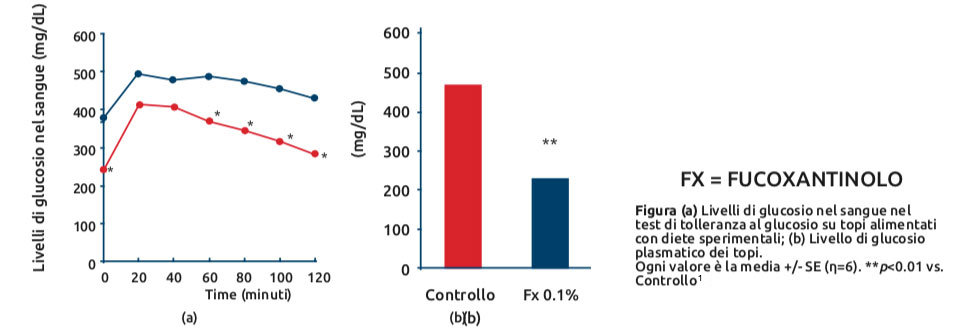
- Stimulation of the uncoupling proteins of the UCP-1 lineage which translates into an increase in caloric consumption particularly evident at the fat level.
- By suppressing the activity of the enzyme glycerol-3-phosphate dehydrogenase, which manifests itself as a reduced capacity for differentiation and maturation of adipocytes, this factor appears to very interestingly hinder the accumulation of fat.
- Regulation of PPAR-γ activity, a factor responsible for the expression of adipogenic genes.
Studies conducted on animal models have also linked fucoxanthin intake to a reduction in glucose levels, a further potentially very useful effect in promoting a metabolic profile more favorable to weight loss.
White mulberry
The fruit has traditionally been used in numerous oriental medicines. From a nutritional standpoint, it displays interesting micronutrient content, especially a wide variety of polyphenols, likely responsible for the observed biological effects. Of particular interest is the ability of white mulberry fruit extract to act through a dual mechanism of action:
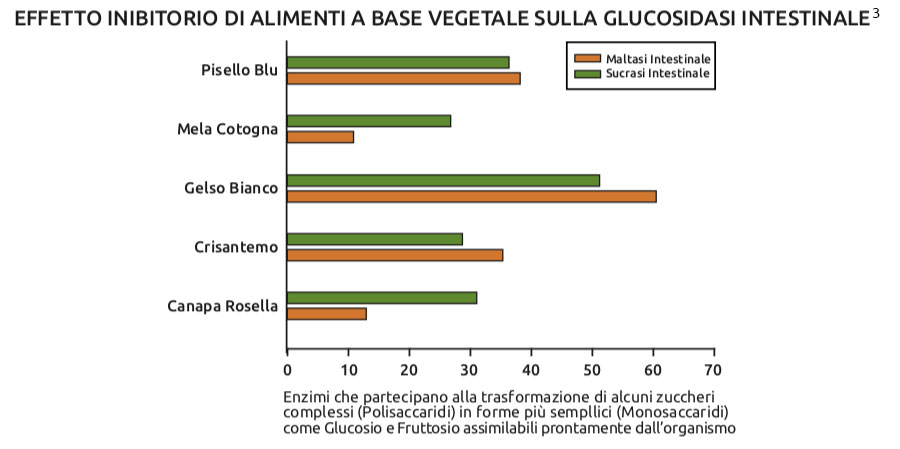
- As a hypoglycemic agent thanks to its ability to promote a reduction in insulin resistance and
- As an inhibitor of α-amylase and α-glucosidase. The inhibition of α-amylase and α-glucosidase is the basis of this extract's ability to reduce the absorption of carbohydrates ingested with food.
Bean
Bean extract is traditionally used to promote weight loss for at least two potentially beneficial effects attributed to the presence of phaseolamine, a protein naturally produced in the plant:
- Appetite suppressant thanks to the ability of phaseolamine to act on cholecystokinin (a hormonal substance with an anorectic function)
- Inhibition of the action of α-glucosidase, reducing the body's ability to obtain and then utilize carbohydrates from ingested foods.
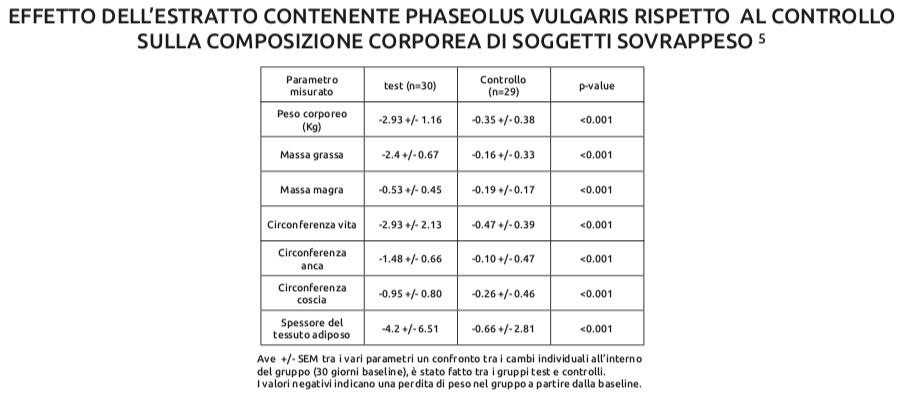
Several studies in the scientific literature report interesting data supporting the use of this nutraceutical tool, where in general, in addition to a reduction in weight, a reduction in anthropometric parameters is also reported, mainly examined after just 30 days of treatment.
A rational and balanced use of these nutraceutical resources can prove to be an extremely interesting tool in supporting a weight loss program, supporting the transition to an increasingly virtuous lifestyle.
Read also: Nature's solution for weight balance
Bibliography:
- 1) A E Jeukendrup, R Randell: Fat Burners: Nutrition Supplements That Increase Fat Metabolism. Obes Rev, 12 (10), 841-51 Oct 2011
- 2)Hayato Maeda, Shogo Kanno… Kazuo Miyashita: Fucoxanthinol, Metabolite of Fucoxanthin, Improves Obesity-Induced Inflammation in Adipocyte Cells . Mar Drugs, 13 (8), 4799-813 2015 Aug 4.
- 3) Qingxia Yuan, Longyan Zhao: The Mulberry (Morus Alba L.) Fruit-A Review of Characteristic Components and Health Benefits. J Agric Food Chem, 65 (48), 10383-10394 2017 Dec 6.
- 4) Sirichai Adisakwattana, Thanyachanok Ruengsamran… Weerachat Sompong In Vitro Inhibitory Effects of Plant-Based Foods and Their Combinations on Intestinal α-Glucosidase and Pancreatic α-Amylase BMC Complement Altern Med, 12, 110 2012 Jul 31. (i grafici vengono da questo articolo).
- 5) Jay Udani, Ollie Tan, Jhanna Molina: Systematic Review and Meta-Analysis of a Proprietary Alpha-Amylase Inhibitor From White Bean ( Phaseolus vulgaris L.) on Weight and Fat Loss in Humans. Foods, 7 (4) 2018 Apr 20.
- 6) Leonardo Celleno, Maria Vittoria Tolaini… Harry G Preuss :A Dietary Supplement Containing Standardized Phaseolus Vulgaris Extract Influences Body Composition of Overweight Men and Women. Int J Med Sci, 4 (1), 45-52 2007 Jan 24.


