


Reading time: 7 minOur immune defenses are divided into nonspecific and specific:
Innate or nonspecific immunity
The nonspecific immune system is a very ancient form of protection against infections common to all living beings, including insects and plants, and is the first response the body offers when it comes into contact with a pathogen.
The word “non-specific” refers to the fact that this system always comes into operation in the same way,
regardless of the type of threat it is currently fighting. Consequently, the immune response itself is not directed specifically against a single germ but is generalized and broad-spectrum.
Through the mechanism of inflammation, the body reacts to the damage caused by germs that have entered the human organism and initiates a series of processes that have a dual purpose:
- make it as difficult for pathogens to replicate as possible to contain the infection
- immediately start cell regeneration processes to repair the damage caused by the infection
The cells most involved in innate immunity are
- macrophages
- granulocytes (neutrophils, eosinophils and basophils)
- NK (Natural Killer) lymphocytes.
Specific or adaptive immunity
As the term suggests, specific immunity acts selectively against germs that have already caused an infection over time. It's also called adaptive immunity because it's stimulated by the germ that poses the health threat.
The key cells of specific immune defenses are
- B lymphocytes that activate humoral immunity: B lymphocytes are activated to produce antibodies
- T lymphocytes (themselves divided into CD4 helper T cells and CD8 cytotoxic T cells) activate cell-mediated immunity, in which T lymphocytes are activated to secrete some inflammatory molecules, cytokines.
The Immune System in Children
As one might imagine, physiologically, children can only rely on their innate defenses, not their specific ones, as these require maturation over time and through repeated infections.
This is precisely the reason why children tend to get sick often: they react with the tools they possess to the attacks carried out by viruses and bacteria and the response is, practically always, of a
inflammatory, therefore with redness of the mucous membranes and a significant increase in temperature.
Over time, by developing a memory of the infections suffered in the early years of life, the adaptive immune system will be able to block a large portion of the bacteria and viruses we come into contact with at every moment of our lives, thus avoiding contracting diseases or, at least, managing to resist them much more than a child.
What can we do to improve our children's immune resistance?
- Breastfeed when possible: Data indicates that children who are breastfed until weaning (around the sixth month) suffer less from many pathologies. Breastfeeding allows the mother to give her child immunologically active substances capable of protecting him from many infections.
- Adequate night sleep: Regularity of schedules is fundamental for children since the immune system also works with peaks of maximum and minimum activity which are metabolically determined.
- Wash your hands regularly: to avoid coming into contact with viruses and bacteria
- Stay outdoors as much as possible: In fact, the sun's effect on their skin helps them synthesize the right amount of vitamin D, which has an immunomodulatory effect. Furthermore, most viruses and bacteria develop and proliferate in closed, warm environments, where illnesses are more common in the winter months. For this reason, it's important to spend as much time as possible outdoors, even in the cold season.
- Follow a correct diet: A varied diet, rich in seasonal fruits and vegetables, ensures a well-diverse gut microbiota. During the first years of life, a sort of "imprinting" occurs on the gut microbiota, which can influence the immune system's function in many ways. This can be achieved by offering children a good amount of fiber through the consumption of fruits, vegetables, legumes, and whole grains. This will allow children to better protect themselves against all infectious diseases, as well as metabolic and autoimmune diseases.
Supplements to support the immune system of children
Vitamin A
Vitamin A comes in two different forms: retinoids and carotenoids. Retinoids can be used by the body directly, while carotenoids must be converted into vitamin A before they can be used as such.
Retinoids are present in various foods of animal origin: dairy products, fish and meat.
Carotenoids, or precursors of vitamin A, in particular beta-carotene, are present in various types of yellow-orange-red vegetables or fruit: carrots, tomatoes, melons, grapefruits,
apricots, berries.
Vitamin A is essential for the development of vision, the immune system, and reproductive capacity. It is involved in bone growth and plays an essential role in cell communication.
Vitamin C
- It is a water-soluble vitamin
- It is present in many fruits and vegetables: citrus fruits, berries, kiwi, melon, peppers, tomatoes, spinach, broccoli
- It helps our body synthesize collagen, which is found in the skin, joints, bones and blood vessel walls.
- It has antioxidant properties, that is, it can slow down or prevent cell aging and is necessary for proper wound healing.
- Vitamin C deficiency causes the following symptoms: tiredness, muscle and joint pain, bruising, anemia, bleeding gums, weak hair, and impaired wound healing.
Today we know that:
- Vitamin C supplementation the frequency of cold episodes
- Vitamin C taken in preventive purpose, while not reducing the frequency of cold episodes, may be able to reduce their duration.
Group B
All B vitamins are essential for turning food into energy.
Many have an antioxidant role, meaning they reduce cell damage and aging. Vitamin B1 is necessary for normal nerve function; B6 plays a role in brain development and
in the formation of hemoglobin (the molecule that carries oxygen in the blood); folic acid (B9) serves to build functioning red blood cells and prevents damage to the nervous system during embryonic life.
Vitamin B12
It is a vitamin present in various foods of animal origin.
Vitamin B12 is present in various animal-based foods: meat, fish, eggs, milk, and dairy products. Conversely, vitamin B12 is absent from plant-based foods.
Vitamin B12 ensures the proper development and function of nerves and is necessary for the proper development of red blood cells. It is also essential for DNA synthesis.
Vitamin D
Vitamin D is normally produced in the skin, which, thanks to sunlight and especially ultraviolet radiation, converts dehydrocholesterol into vitamin D3, or cholecalciferol. Vitamin D3 is not yet active: it must first pass through the liver and then the kidneys to become a hormone: 25-(OH)2-cholecalciferol.
Vitamin D is also found in some foods: especially fatty fish such as salmon, herring, sardines, and fish liver (cod liver oil), canned tuna, egg yolk, butter, and green leafy vegetables.
Vitamin D is essential for promoting calcium absorption from the intestine and calcium and phosphorus reabsorption by the kidneys. It is essential for calcium deposition in bones and for their characteristic strength and resistance. Recent studies suggest that vitamin D also promotes healthy immune system function.
Vitamin K
The most important source of vitamin K is green leafy vegetables: spinach, broccoli, and lettuce. Vitamin K is also found in legumes, vegetable oils, and some fruits (such as blueberries and figs). Animal-based foods (meat, cheese, eggs) contain lower amounts of vitamin K.
Vitamin K is essential for proper blood clotting and also plays a role in bone health.
Zinc
Zinc is a micronutrient found in foods such as meat, fish, eggs, dairy products, legumes, and nuts.
Zinc has antioxidant properties and is essential for macronutrient metabolism. It also plays an important role as an immunostimulant, participating in the maturation and differentiation of immune cells, promoting the development of lymphocytes and the production of antibodies.
What type of integration can be useful in case of need?
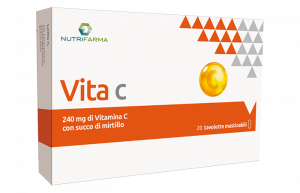
VITA C It is a vitamin C food supplement in fruit-flavored chewable tablets, indicated in case of reduced dietary intake or increased needs of this vitamin.
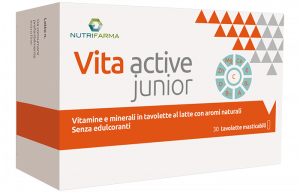
VITA Active Junior It is a food supplement with vitamin B6 and vitamin B12, which contribute to the reduction of tiredness and fatigue, vitamin C, folic acid and zinc, which contribute to the normal function of the immune system, vitamin A, which contributes to the maintenance of normal vision, vitamin D which contributes to the maintenance of healthy bones and teeth, proving also useful for school-age children during periods of greater commitment.
Dr. Sara Bernardi
Nutritionist Biologist and Pharmacist

Bibliography
- Nutrition and the Immune System: A Complicated Tango. Venter C, Eyerich S, Sarin T, Klatt KC.Nutrients. 2020 Mar 19;12(3):818. doi: 10.3390/nu12030818
- An overview of the immune system. Parkin J, Cohen B.Lancet. 2001 Jun 2;357(9270):1777-89. doi: 10.1016/S0140-6736(00)04904-7.
- Vitamin C and Immune Function. Carr AC, Maggini S.Nutrients. 2017 Nov 3;9(11):1211. doi: 10.3390/nu9111211.
- Essential role of vitamin C and zinc in child immunity and health. Maggini S, Wenzlaff S, Hornig DJ Int Med Res. 2010 Mar-Apr;38(2):386-414. doi: 10.1177/147323001003800203.
- The importance of vitamin B12 for individuals choosing plant-based diets. Niklewicz A, Smith AD, Smith A, Holzer A, Klein A, McCaddon A, Molloy AM, Wolffenbuttel BHR, Nexo E, McNulty H, Refsum H, Gueant JL, Dib MJ, Ward M, Murphy M, Green R, Ahmadi KR, Hannibal L, Warren MJ, Owen PJ; CluB-12.
- Vitamin B6 and immune competence. Rall LC, Meydani SN.Nutr Rev. 1993 Aug;51(8):217-25. doi: 10.1111/j.1753-4887.1993.tb03109.x
- Vitamin D signaling, infectious diseases, and regulation of innate immunity. White JH.Infect Immun. 2008 Sep;76(9):3837-43. doi: 10.1128/IAI.00353-08. Epub 2008 May 27
- The immune system and the impact of zinc Haase H, Rink L.Immun Ageing. 2009 Jun 12;6:9. doi: 10.1186/1742-4933-6-9


