


Omega 3 (n-3 PUFA) are essential fatty acids, that is, a particular type of fat that cannot be synthesized autonomously by the human organism, but absolutely essential for your health (Omega 6 also belongs to the same category).
Omega 3s are therefore polyunsaturated fats that need to be consumed through the diet and/or through the use of specific food supplements.
As we have already said HERE Omega 3s offer many benefits for a healthy body, but -despite this- too often we don't pay attention to getting the right amount of these precious elements.

Where are Omega 3s found?
Introducing Omega 3 through food is certainly a correct practice, but unfortunately it is not always sufficient: this is precisely why omega 3 supplements come in handy. natural Omega 3 supplements, but we'll talk about this later...
Foods rich in Omega 3 are divided between those containing Alpha Linolenic Acid (ALA) and those which are instead a source of Eicosapentaenoic Acid and Docosahexaenoic Acid (EPA and DHA): the former are mainly of vegetal origin, such as dried fruit (especially walnuts) and some vegetable oils based on oilseeds, while the latter are mostly of animal origin, such as blue fish, salmon, tuna, sardines and herring, but also krill and algae.
The Western diet, unlike the eating habits more widespread in Asian countries, for example, often does not include the above-mentioned foods in the normal daily diet.
However, fluctuating or incorrect intake of these essential fatty acids can be easily balanced by taking specific food supplements.
The benefits of Omega 3
We therefore list below the real benefits of Omega 3 on the body.
- They are very important to increase or preserve one's own immune defenses.
- They are essential for fighting and/or regulating cholesterol and triglyceridesand therefore precious allies of the health of the Heart.
- Also Omega 3 and skin They are particularly related: Omega 3, in fact, like Omega 6, help maintain the barrier function and prevent the onset of dry skin.
- Hair and nails They benefit from Omega 3s, as they ensure a well-hydrated scalp, preventing hair loss. They also nourish keratinocytes, which are essential for healthy nails and hair.
- Omega 3 and collagen: Omega 3s slow down the degradation of collagen in cartilage.
- Omega 3 and metabolism: contrary to what one might think in relation to fats, Omega 3s are also useful in low-calorie diets for slimming and weight loss, they are in fact anti-lipogenic, which block the storage of fats and increase metabolism, to burn fat faster.
- Omega 3 and memory: contributing to the health of cell membranes, Omega 3 are also responsible for their functionality.
- Omega 3 and hormones: the hormonal balancing effect of Omega 3 can be useful in cases of specific pathologies, infertility, impotence and/or menopause.
- Omega 3s also play an important role in protecting the joints, thanks to their anti-inflammatory effect, capable of preventing or slowing the progression of osteoarthritis.
What happens if you take too much Omega 3? Are there any contraindications?
Generally speaking, no particular contraindications are recognised. related to the use of Omega 3, unless - obviously - you are faced with specific food allergies and/or intolerances.
People who regularly take anticoagulants and nonsteroidal anti-inflammatory drugs (NSAIDs) are at risk, as Omega 3s can affect the time it takes for blood to clot.
What does Omega 3 deficiency mean?
Omega 3 intake is essential for the body, in fact they are essential for the production of eicosanoids, for the correct functioning of the immune system, the lungs, the cardiovascular and endocrine systems.
Symptoms related to Omega 3 deficiency are called FADS, which is the acronym for Fatty Acid Deficiency Syndrome, fatty acid deficiency syndrome, and may include:
- skin problems (dry skin, dandruff, brittle nails and hair, dry eyes, etc.);
- attention deficit;
- mood swings, anxiety and/or depression;
- sleep disorders;
- inflammation and joint pain.
At what time of day should you take Omega 3?
The answer to the question “When should you take Omega 3?” There is no single answer, but generally it is recommended to take supplements Omega 3 during meals, about half an hour before or after lunch or dinner, since - being fats - they need to be emulsified and digested to allow their absorption by the body.
How to recognize a good Omega 3 supplement?
Before choosing your Omega 3 supplement, it is good to know that these precious fats are very delicate; in fact they fear light, heat and contact with oxygen, thus risking degradation.
Therefore it is advisable to choose natural supplements in capsules or pearls rather than liquids for example.
It is also important to check for the presence of antioxidants and/or vitamin E among the ingredients of the Omega 3 supplement, essential for the preservation of the fundamental active ingredients.
Finally, a further guarantee of the good quality of Omega 3 supplements are the certifications FOS and IFOS™.
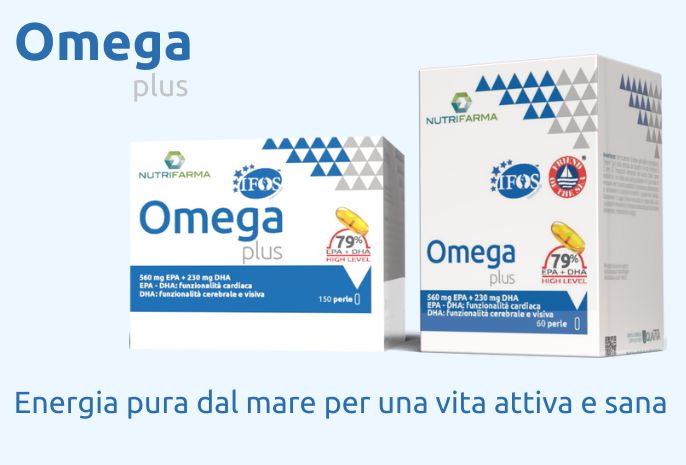
Omega plus It's a great example of Food supplement based on fish oil titrated in Omega 3 (EPA-DHA); IFOS certified and produced in gelatin pearls.
It guarantees the daily intake of an average quantity of 250 mg of Omega 3, essential for maintaining normal heart function and to ensure normal brain function and visual ability.
Also Aterolip plus it's a natural supplement in pearls, based on IFOS 5 STAR certified fish oil, GOED: EPA, based on Monacolin K, produced from fermented red rice, which, with an inhibitory activity of HMG-coA reductase (hydroxymethylglutaryl coenzyme A reductase), has a favorable effect on lipids, reducing the synthesis of endogenous cholesterol and triglycerides.
Aterolip plus also contains Berberine, Polygonum Cuspidatum (Resveratrol), Naringin and Omega 3, antioxidants and vitamin E and is essential for the regulation of the main cardiovascular system functionality.
*Both Omega 3 food supplements are gluten-free and lactose-free.


